Renaissance Fusion, DIFFER and VDL sign MoU on fusion industrialisation
Category: Blankets, Divertors, Stellerator

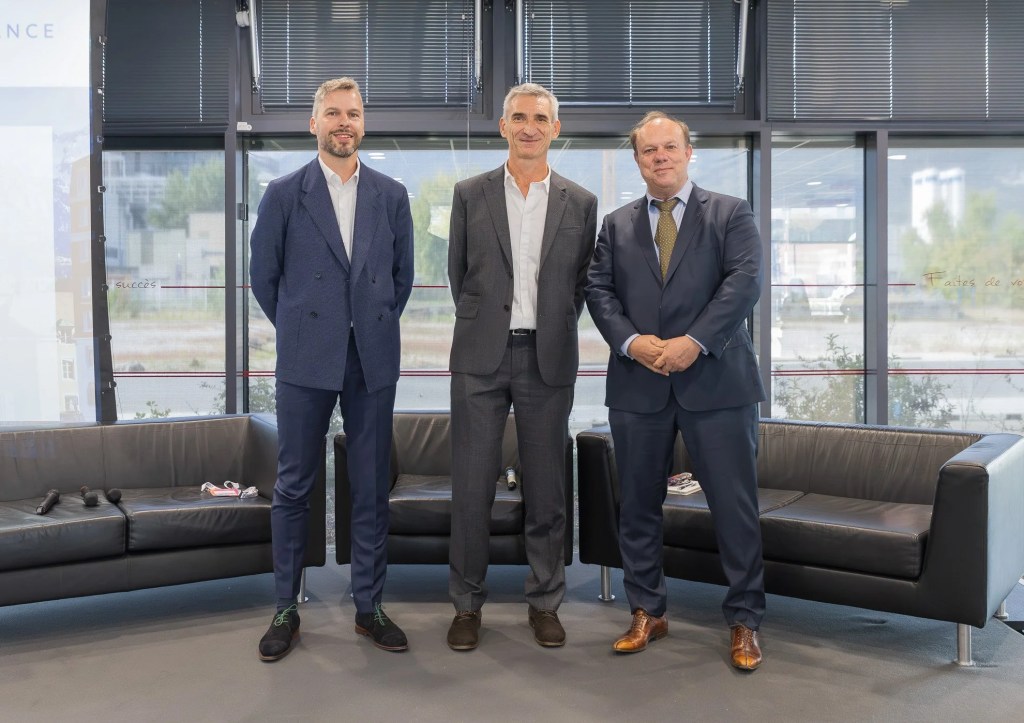
Under the fusion industrialisation MoU, an envisaged consortium would advance fuel cycle and breeding blanket solutions
(Image courtesy of Renaissance Fusion)
Renaissance Fusion has signed a memorandum of understanding with the Dutch Institute for Fundamental Energy Research (DIFFER) and VDL Groep to develop and industrialise fusion energy systems in the Netherlands. The company envisages a phased approach, starting with joint development and moving toward an industrial consortium for fuel cycle and breeding blanket solutions. That consortium would also take on a high-field simplified stellarator demonstrator, subject to technical and financing milestones.
A phased path through the Renaissance Fusion MoU
Announced from Grenoble on September 24, the Renaissance Fusion MoU comes with a phased plan that the company envisages, with joint development first and an industrial consortium second. The deal reflects a wider shift in the fusion sector, where scientific progress must increasingly be matched by industrial capability able to manufacture, test and deploy critical systems at scale.
What each partner brings to the Renaissance Fusion MoU
Renaissance Fusion contributes blanket technology, fuel cycle experience and system integration expertise for simplified stellarators. DIFFER brings scientific knowledge in plasma physics, plasma-facing components and liquid metals, and VDL Groep adds advanced engineering, precision manufacturing, high-tech assembly and industrial scale-up.
CEO Sam Guilaumé said Renaissance Fusion has built expertise in blankets, fuel cycle, lithium enrichment and stellarator module integration, and sees the next step as an industrial platform that can draw in partners, capital and manufacturing expertise.
Liquid metals are already a shared area of work between DIFFER and Renaissance Fusion. DIFFER’s plasma material interactions group researches them as plasma-facing divertor solutions, using its Magnum-PSI and UPP linear plasma devices, while Renaissance Fusion’s stellarator concept coats its cylinders with flowing liquid metals for neutron shielding and heat extraction.
The Brainport manufacturing base behind the plan
Renaissance Fusion describes the Netherlands as a strong foundation for this phase, with a well-established fusion research base, advanced design and manufacturing capabilities and a dedicated academic talent pipeline. That foundation is anchored locally, with VDL Groep headquartered in the Brainport Eindhoven region and DIFFER based in Eindhoven.”
Hans Priem, VP Business Development at VDL Enabling Technologies Group, said industrialising fusion will take an ecosystem that brings together engineering, precision manufacturing, specialist suppliers and research, and that Brainport has built one around those capabilities. VDL Enabling Technologies Group works with OEMs on high-tech systems and modules, including production equipment for the semiconductor industry.
DIFFER Director Marco de Baar said working closely with technology developers and industrial partners can help validate promising approaches and show how they behave under relevant conditions. In his view, that shortens the path from research to industrial application.
From joint development to a fusion consortium
According to Renaissance Fusion, the MoU is the starting point for a broader industrial effort, aimed at moving Europe from fusion science to fusion industry through new technologies, manufacturing capabilities and supply chains. The envisaged consortium would advance fuel cycle and breeding blanket solutions, while the demonstrator stays tied to technical and financing milestones.
Stay ahead in the fusion revolution explore more breakthroughs from leading innovators in clean energy technology.